Tuesday, January 24, 2012

Tan Stones


Object: Tan Stones
Observer: Joe DeRoin McGrath
Dimensions: Ranging from 1-2.5cm L x 1-2cm W
Material: Rock
Inventory Date: January 12, 2012
Location Found: Roski School of Fine Arts, USC

Differences:
  1. Texture
  2. Some of the stones are worn to appear a light grey or pewter color.
  3. Shade: Ranging from Light-tan, medium-tan, dark-tan, gray, and multi-colored
  4. Dimensions: small <1cm W, large > 2cm L or W
  5. Weight
  6. Asymmetry
  7. Roundness
  8. Chipped
  9. Jagged, Teeth-like features
  10. A portion of the stones resemble sea coral, featuring small air pockets on their surface
  11. Thickness
  12. Dirt Content
  13. Squareness
  14. Some stones resemble Marble
  15. Height
  16. 'Skip'-ability (Flat/Round)
  17. Density
  18. Location collected
  19. Some Stones resemble pewter
  20. Surface Quality

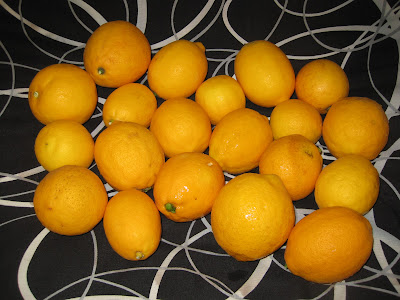
Observation: Lemons


Object: Lemons
Dimensions: 2-4 inches diameter, sphere-shaped
Material: lemon skin, citrus inside
Inventory Date: January 23, 2012
Location Found: Refrigerator (origin: Roommate’s garden)

Differences:
  1. Color, darker and lighter yellow, some more orange than others
  2. Some more oblong than others, some rounder
  3. Some have stems some don’t,
  4. Difference in stem length and color
  5. Density, some more hard, more pulp in it, and some easier to squeeze, more juice
  6. Texture – some rougher than others
  7. Wrinkles – some have more wrinkles, some less
  8. Grayish dots – some have more gray dots than others
  9. Bottom tip, some protrude out some don't, differs in size and shape
  10. Smell – some have a stronger lemon scent than others
  11. Taste – some will be stronger/ more sour than others
  12. Thickness of skin – some have thicker skin than others
  13. Easy of opening – some will be harder to cut open than others
  14. Age – some will rot faster than others
  15. Shine of coat – some still retain water from the washing while others don’t
  16. Scars – some have scratch marks in their skin while others don’t
  17. Spin ability – some are easier to spin than others (do to top-like shape)
  18. Stem-like dot on bottom – some have greenish dots on bottom tip, others don’t
  19. Size – Some are huger and rounder than what you’d think of your typical lemon, others are more typical, some are tiny
  20. Gradient of color – some change color over the course of the lemon, some more drastic, others more subtle
Potential Categories: color, size, shape, texture, taste, density
Additional Notes: If anyone wants lemons please let me know. I have a lot more than 20. Tangerines too!
Fieldworker's Initials: SW, Steffi Wong

Monday, January 23, 2012

MY ROCKS!!!


Object: ROCK
Date Found: January 12, 2012
Location Found: Entrance of Roski

20 Differences:

1.) Different shades of color
2.) Sharpness
3.) Dull
4.) Roundness
5.)Thickness
6.) Height
7.) Some seem to fit another (puzzle)
8.) Weight
9.) Texture
10.) Size
11.) Some are flat
12.) Number of sides
13.) Looks like chewed up gum
14.) Broken tips
15.) 3rd rock on the top looks like Nevada
16.) Some have stains
17.) 1st rock on the top looks like Italy
18.) Some doesn't belong in the same rock family category
19.) 2nd rock on 3rd row looks like a bald eagle head
20.) 1st rock on 2nd row looks like a little chick (bird)

Object Documentation Log: Beach Glass


Object: Beach Glass (Worn glass washed up on the shore)
Dimensions: Approximately 1-5 cm in length and height 
Material: Broken Glass
Inventory Date: 1/15/2012
Location Found: Beaches back home in Hawaii

Differences:
1. Their shape
2. Height
3. Length
4. Thickness
5. Mass
6. Weight
7. Texture (Some were rough, some were smooth)
8. Number of sides
9. Some had writing or letters in the glass
10. Some had patterns such as stripes
11. The amount of scratches on the surface
12. Rounded corners versus sharp or pointed corners
13. Variations in the color
14. Curved edges versus straight edges
15. Location found
16. Some looked much older than others
17. How clear or transparent the glass was
18. Some had new chips out of their surface while other were intact
19. Some were chunks out of a curved section of a bottle while other were flat
20. Type of glass object they came from (small bottles, large bottles, glass floaters for fishing, ect.)

Potential Categories: Shape, Size, Texture, Age, Transparency,Weight
Fieldworker's Initials: NH


Found Object: Fallen Flowers


Object Documentation Log: Honey Roasted Sesame Sticks


Object: Honey Roasted Sesame Sticks
Dimensions: varies (approx. 2cm-5cm)
Material: wheat flour, soybean oil, sesame seeds, bulgur wheat, maltodextrin, honey, sugar, wheat starch, salt, xanthan gum, beet powder, turmeric
Inventory Date: January 23, 2012
Location Found: inside a can of Planters NUTrition Energy Mix

Differences:
  1. number of sesame seeds
  2. height
  3. width
  4. length
  5. roundness of tips
  6. curvature
  7. mass
  8. jaggedness of edges
  9. size of sesame seeds
  10. pigment of brown
  11. some have broken tips
  12. taste
  13. density
  14. location found
  15. coated flavorings
  16. location of sesame seeds
  17. location of dark brown spots
  18. size of dark brown spots
  19. number of dark brown spots
  20. shininess of oil
Potential Categories: color, height, length, texture
Additional Notes: some were consumed in the process...
Fieldworker's Initials: JK

Object Documentation Log: Pistachios


Object: Pistachio
Dimensions: Varies (1.1cms-1.4cms to 1.4cms-2.3cms)
Material: Seed, Shell
Inventory Date: 16 January 2012
Location Found: RLCR-7 Super Market, Sector 7-A, Chandigarh, India

Differences:
1. Some are long and some are short.
2. Some are full grown and some are really small.
3. Some are round and some are elongated.
4. Most are yellowish-brown, but some are whiter.
5. Most have openings; some do not.
6. A few have cracks.
7. Some have mostly smooth shells, but others have irregular protrusions.
8. Some have the openings on the sides.
9. Some have brown stains.
10. Some have white stains (looks like salt).
11. The insides of most are mauvey. But some have the skin off, and are yellowy.
12. The end, where the stem meets the nut, is positioned at different angles in all of them.
13. Some are pointy. Some are curvy.
14. Some have dents and depressions.
15. The openings of most shells are straight. But some have rugged openings.
16. Some seem easy, even fun, to open, but the rest seem not worth the effort.
17. Some look old, some look in their prime stage.
18. Some tend to naturally lie down on their sides, while the rest lie down on their openings.
19. The seeds inside some are split apart and have tiny holes.
20. Most look tasty; some do not look so tasty. The ones with closed shells should be tasty.

Potential Categories: Length, colour, shape, size, smoothness, pureness, age, position, attractiveness.
Additional Notes: The selection that was kept for observation was more tempting than the other eatable pistachios.
Fieldworker’s Initials: RK