Showing posts with label Art and Design: where is the line?. Show all posts

Monday, November 10, 2014

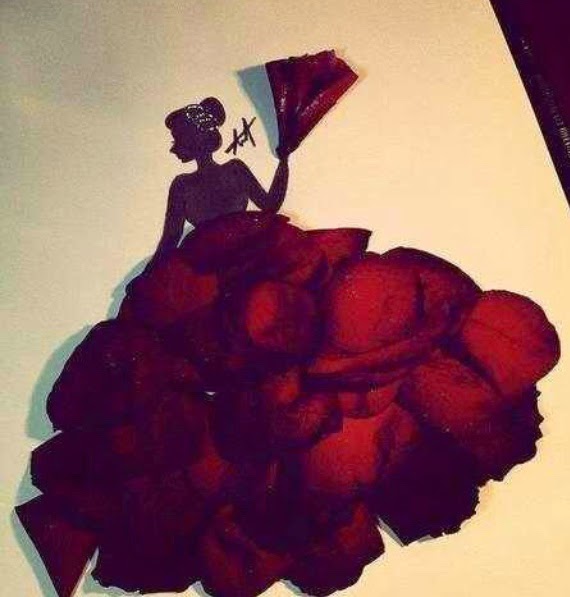
Petal Fashion

Fashion designs using flower petals. I found these and thought other people would be interesting in seeing them!


Wednesday, October 15, 2014

Words come to life..

Finally our class project on Movement, Proportion, Emphasis & Economy, and Balance is complete! I am so relieved to be done with it after over 100 sketches and numb fingers from cutting all the designs. I decided on a concept of "Words come to life" through endangered species. Here are the final pieces and some sketches from along the way. 

The entire set...

Design Principle of Movement...

Design Principle of Emphasis & Economy...

Design Principle of Proportion...


Design Principle of Balance...


Saturday, September 6, 2014

All about Lines


This is my response to our project with Lines in class. Shown are the tracings I made of my original drawings, designed with three different ideas for filling in the shapes and spaces.

Thursday, December 12, 2013

Warp Records' Album Art

In design, we are presented a set of constraints and prompted to come up with solutions. One such example of a unique constraint set are those presented in album cover art. The designer must pick a representation that is cohesive with the track list and the mood that the band wants to convey, while also being memorable enough to make a splash in the industry. Warp Records' 2013 album releases are showcased here, and allow you the convenience of listening to songs from the albums without even opening a new tab! I encourage you to check them out, and see if the album cover provides a coherent face to the music contained therein. Here's an example by Clark, the cover of Feast/Beast. The artwork was a collaboration between the musician and Alma Haser.

Wednesday, December 11, 2013

Future of GIFS

Using lenticular printing, Gifpop! is bringing digital gifs into the physical world [see first picture below]. Awesome, and pretty simple concept. I see a lot of opportunities for design work using this.

The Gifpop team is also working with a couple of really cool gif artists, including Mr Div and Davidope (I attached some of their work below).

Designing Gifs are definitely something I'd like to get into... I just don't know where to start. Enjoy!

http://www.kickstarter.com/projects/sha/gifpop-custom-gif-cards-for-everyone

a short note:  less than 24 hours to go on Gifpop. last chance to be a part of the initial run and get one of thesethanks for the backs so far

I’m working on a tshirt-design for Warp RecordsFor that I was browsing my old MR images (I’ve already made an animated version earlier). I thought if I would place the slices (frames) as a sequence in space it would give a semi-3d object. And it works!131130design_takes_timeglobulus

Monday, December 9, 2013

MFA Lecture Series - EXTRA CREDIT (Merlin Carpenter)

Merlin Carpenter, No Re-Entry, 2011

Today, I attended a lecture by artist, Merlin Carpenter. During the lecture, Carpenter talked about three of his recent exhibitions. The first exhibition featured a door barricading a room. In order to enter the exhibit and see the paintings within, one had to pay 5000 euros, or they could stay in the greeting area and pay nothing to see playing cards with the paintings on them. Through this exhibit, Carpenter plays with the idea of commodity. As an artist, one produces commodities of no value, but with regard to the capitalism system, art becomes of value. Thus, paying 5000 euros becomes alright in the minds of the consumer to view and purchase commodities. Furthermore, Carpenter criticizes how money plays a crucial role in the art world. In addition, another exhibit carpenter talked about was titled Tate Cafe. In the exhibit, Carpenter sent up the space to look like a cafe, furnished with pricing menus, chairs and an no re-entry door. The no re-entry door symbolized how the space was an organized thought out area, but when the viewer left the space, they would return to a world of chaos. Furthermore, the door symbolized how the artist can manipulate the viewer, like the manipulations of a capitalist society. As such, through this exhibit, Carpenter shows how the artist is a free person, but works within the constraint of capitalist realism. Moreover, the last set of slides Carpenter displayed to the audience was of his project with around 30 faux Burberry pattern paintings. Carpenter brought these Burberry paintings throughout Eastern Europe with him. Bringing these paintings throughout Europe with him allowed him to juxtapose the symbolic nature of the pattern of Burberry in that it has resulted from a capitalist society with the wildly capitalist society of Eastern Europe. While the Burberry paintings are seen as lavish, when set next to an rundown environment of Eastern Europe, it looks even more lavish. In a sense, while capitalism works for Burberry, Carpenter suggests that it may not be beneficial for everyone, such as Eastern Europe.
Merlin Carpenter, Burberry Paintings, 2010
Although Carpenter's work lacked artistic aesthetic value to my personal taste, it was interesting to learn of his ideas. Carpenter highlighted to me the importance of viewing art through the constraints of capitalism. Capitalism is prevalent in society, and as an artist, one must not completely avoid the system. While artists desire to be removed from the ideals of capitalism, without working within the constraints of capitalism, artists will be left out of the competition for influence.

Thursday, January 31, 2013

Good Design (best square)


            In my opinion, good design is typically a combination of different qualities. As we have mentioned in class, these qualities or elements can be anything from function to aesthetic appeal. The best square that exemplified good design can be seen in the picture below. I feel as though this qualifies as a “good” or successful design because the unique shapes draw in my curiosity and attention. It makes me think that I’m only getting a small taste of something larger (perhaps a close up of an animal’s skin), and in doing so, the sketch leaves it up to my imagination. Having said that, I believe that this design is ambiguous as it gives power to the spectator to determine what it is and what it means for him/her.  In a sense, the spectator is challenged to think of what these shapes make up or what they could possibly mean. Overall, I think good design invokes either an emotional, social, or psychological response in people, but this is largely based on what viewers bring (their experiences and so forth) when they observe the piece; that is, successful design is negotiable in that as design, our sensibilities, and tastes/preferences change, so do our relationships with it (to creativity/art/style). In short, good design, for me is something that stands out uniquely and is able to communicate something that one can appreciate (and I believe that the square that I have chosen, does just that). 


Wednesday, August 31, 2011

DESIGN: my definition...

Design to me implies an arrangement of things in space: what is the perfect configuration to solve the problem of a) making something aesthetically pleasing, b) useful,or c) achieve the goal in mind. But it's not just concrete-- think of an architect's mental design of a building, or the way all the chemicals in DNA are designed and configured a certain way to do what it needs to best. The old masters understood and appreciated the natural design of the organic world around us, and the philosophers of ancient Greece used math to try and understand the design of the universe. Above all design means there is forethought involved, and every step is certain and necessary for its purpose. What I don't yet know, though, is whether it exists out there and we just pick it up with our radio antenna of a brain, or if it's a human invention to understand the workings of the world around us...

Monday, October 18, 2010

Design and Branding: Miike Snow


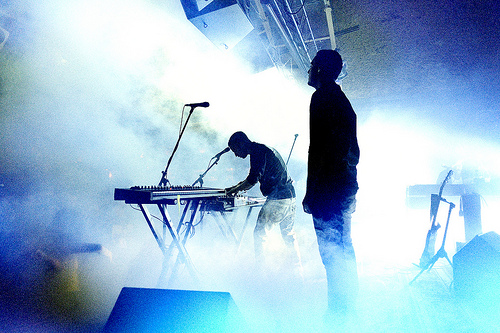
So I went to a Miike Snow concert this past Thursday. Now, while I highly enjoyed the music and the concert atmosphere (but for the people standing in front of me who somehow brought sacks of confetti that they frequently tossed into the air and into my face), I was actually most struck by the visual composition of the show. The producers had combined a series of light effects with a fog machine to create an amazing, ghostly backdrop for the band.

(I did not take my own pictures, so I will have to giddyup on google to rustle up images that sort of illustrate what I mean)


I was fascinated by the interplay between the fog's organic forms, and the straight, dynamic beams of line that coursed through them. Often the musicians were silhouetted against the halo of light, lending the performance an eerie, ethereal flavor.


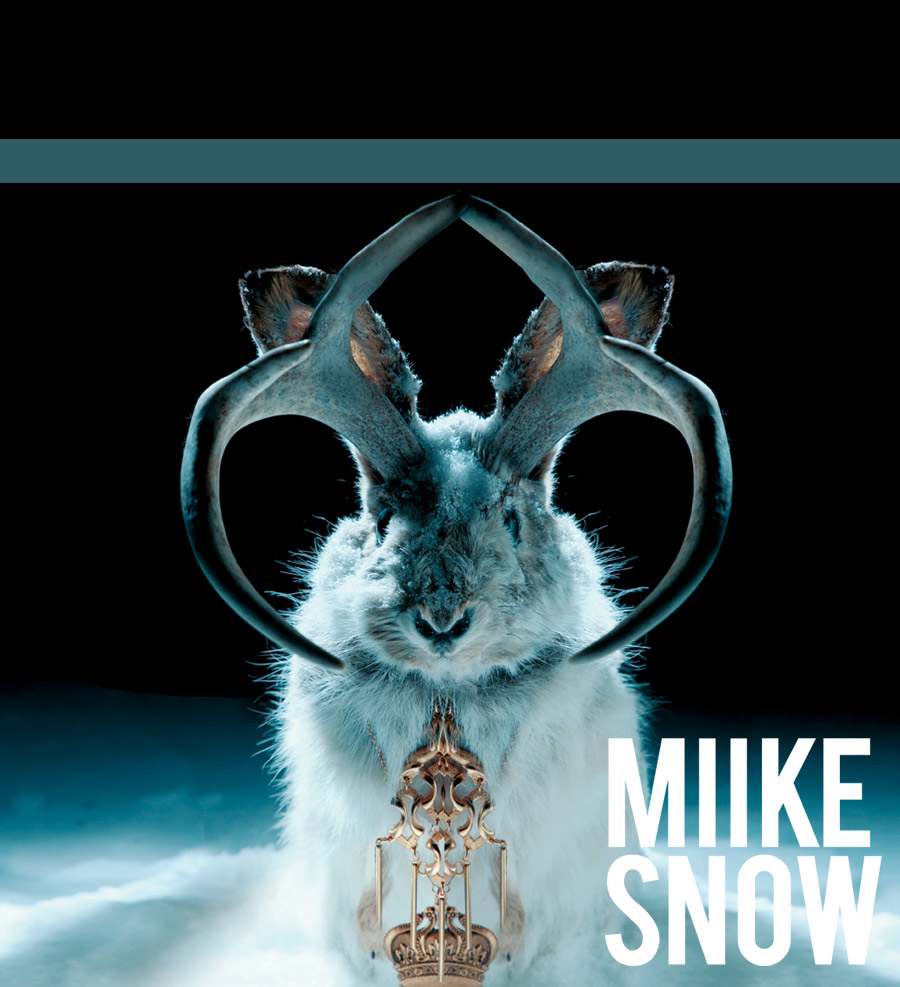
I am always impressed by performers (or their publicity teams) who succeed in creating a unified brand. Miike Snow's music is itself a little haunting, and their live shows preserve that same ambience. The stage was flooded shades of blue, white, and gold, echoing the hues in their promotional images.


Check out their myspace also: how slick is that?

I believe Design is inherently commercial. Artists and designers are separate entities because of the different career paths they choose, though naturally the two may overlap. But given my definition of Design, clever integrated marketing and unity of brand strikes me much more than a design without a patron. Design is at its best when it is working to accurately and flatteringly represent a client. An entity gains dimension when all its components resonate to the same theme. For a musician, coordinating sound and sight gives performance a new fullness of experience.

Tuesday, April 27, 2010

Design VS Art

Designer and Artist
Designer is not an artist.
Because, when they start a project, they have a limitation and guideline to satisfy.
They have to consider their specific audience's desires and needs.
The way artist and deisgner affect the society is different. They have different role.
Deisgner affect and decide entire life style of human. From how we dress to where we live.
However, Artist has a different role. Artist are able to express themselves in the way that they
choose to believe. Artist's main purpose in the society is to cause the people to question, to provoke the people to think in diffrent way.

Wednesday, November 4, 2009

Art vs. Design


I believe that art is everything. It all depends on how one views the world. Personally, I think that art and design are the same thing. Yes, there are differences between the two but in general I believe they are the same. I think design is an art form. Design can be used more commercially whereas art is more of a personal use or pleasure. It is all based on personal opinion on whether something is a design or artwork.

Thursday, September 17, 2009

Art vs. Design

I see art and design as both ways of expression. Art has no rules, and can creates problems by letting the world see your visions and to hear your voice with no boundaries. It is free and anything can happen even if it doesn't make sense to anybody else but you, the artist. An artist makes their own rules and guidelines. Design is creativity at its finest because when a problem is addressed, you must utilize art to make a solution for the problem to make something work. a designer works off someone else's guidelines making someone else's life beneficial with the their work. A designer and artists world are completely different universes both starting from different motive, ending with different results.

Wednesday, September 9, 2009

Art vs. Design

I think that both works of fine art and design visually convey the artist/creator's personal style as well as the reason for which the work was produced. I agree with Norman Potter's assertion that design has a more practical value for humans for, in addition to being appealing to the eye, it has a easily discernible function. For example, designs can be used to make websites easier to navigate and messages more appealing to read. Although all fine art mediums have the ability to communicate through, tone, content, and style, they provide the observer with more freedom. Design on the other hand, has a more specific function to carry out and will often "instruct" an onlooker to think certain thoughts or alter their actions to accommodate the intentions of the design they are confronted with. Regardless of the ways in which they differ, I feel that both fine art and design are essential to a healthy and functioning community.

Tuesday, September 8, 2009

Art and Design

Art and design are both built off of the same basic concepts of color and competition, but there lie very distinct differences between the two. The most apparent difference is the purpose of the piece. Design is about fulfilling the consumer’s desires, whereas fine art is about the artist. Design is used to serve a purpose and to solve a problem. Art does not have to fulfill either of these requirements. We have talked a lot about how good design can merge into the category of fine art. I believe that if design does even motion, as fine art does, then it can be considered art as well. Without this, it is just design.

Tuesday, September 1, 2009

Design&Art

In high school, I took 2 classes I knew would impact my future as an artist or designer, or both. I took the basic visual arts class where I created work that went into the final senior art exhibition. My 2nd class was called Design Technology where I studied the steps/cycle and techniques in which a designer uses to create a product. So when I was given the task to discuss the difference between Art and Design, I thought back to my high school days and those classes I took.
To me...
Design tends to be created as a solution to an existing problem. A design may be considered a piece of Art but Art would not be considered a design. However it is not to say Art does not serve a purpose. Art, or a piece of artwork serves to bring visual aesthetic pleasure to people who view it, it may also bring ideas and emotions as viewers begin to peel the art apart and interpret any hidden messages and intensions of the artist. A designer creates things based on the set problem with constraints set by the client while an artist creates artwork from ideas that are true to him or herself.  He or she decides how the outcome will look like. However the process of making artwork or designing a product begin to have similarities. 
In my Design Technology class we learn about the design cycle which includes steps such as research, planning, create and evaluate, at the same time I realized when I create artwork, I adapted the same process. 
There are differences between Design and Art but when it comes down to the process, its about the same. As for practicality, Design leads to a final product that helps solve an initial problem. However Art may sometimes address a problem such as poster art addressing an important issue. Then would that be called a Design or a piece of Art?

Art v. Design

I feel that design is considered an art form regardless of the intentions of the artist. Whatever we do as human beings, we all create something in our daily lives, naturally, physically, and mentally. If you look at it in that perspective everything can be a potential art form. Living as individuals gives us our own unique design in its own. One may not consider design, often something unappealing, to not be an art form, but I feel anything can be art, and design until you perceive it not to be.

Art vs. Design

Art is such a multifaceted term that it cannot be defined by one sentence or one person. It is experienced differently by each person because everybody has had his or her own experience. Design is a form of art when it is able to affect somebody but at that moment it is only considered art to them. It does not necessarily have to be created with an intention of being art but the fact that it seems to be art to one person because they can relate to it and it somehow affects them and their lives allows design to be art. Therefore design is considered art only when it is able to have an effect on someone. Due to the fact that “a designer works through and for other people”, design is able to be considered art. It may not seem like it is art to the designer but to the people he was marketing it towards and to the people he has affected, that design may be the greatest piece of art.

Art v. Design

Art and Design differ in their fundamental goals. Art is made to start a discussion and stir up a response within the viewer. Without this level of interestingness to the culture it is created within, it is worthless. Design, however, is created to solve a problem. This is not to say that design cannot be art. If, say, the solution found through the process of design is to start a discussion, or even if the design happens to do so, even if it is not intended to, the work of design is art. The two are not exclusive; it is possible to have work that is both and work that is either.

Art and Design (it's not a competition)

Great art gets talked about. Great designs are often referred to as works of art. What does that tell you? So not all art is created with the intention of being art. Art then, is a term that society applies to a an object. The qualifications of what society deems to be art changes over time. It used to be that art, great art was based on skill level, accuracy of replication, command of shadows, blah blah blah. But contemporary art is based on meaning. I think thats where art and design differ. Design is always functional. Its intended to be used for the physical creation of an idea. We can even design a work of art. But the design and the work are separate. We kept asking about purpose. But what if by "purpose" we intended to say "meaning"? Contemporary art offers meaning, but design offers none. Even if the artist of an artwork does not give his own work meaning, someone else may find meaning in it and thereby call it art. If no one ever sees my painting of a little girl its still art because I painted that little girl in such a way that it means something. But because it doesn't get seen, it doesn't get rated or valued. It's a benchwarmer without the opportunity to strike out nor to hit a homer. We live in a revolutionary/reactionary society. A society where everyone wants to put their 2 cents in, even if it's uncalled for. Thats why people today seek to ascribe meaning to art. If I piss on canvas (yes Pollock!) simply because I couldn't hold it, someone might see my canvas and say wow this ugly yellow stain on a canvas that smells like piss is a statement of how our government pisses on us. That person is an idiot. I simply had to pee. But if other people agree with his idea and it gets popular enough, my piss is now art. How about that

Art VS Design

Almost everyone will answer with a statement that design in a form of art. However, there really is a difference between art and design. From an article by Norman Potter, he states that before a designer uses his own imaginative ideas, they must be "highly 'problem' conscious... an ability for sorting, ordering and relating information he must bring qualities of judgement and discrimination." Not only do they have to create a design that will fit the clients' needs, they have to have the patience to alter the work however many times it takes to satisfy his or her client. Designers also have to address the client's message in a form of art and therefore "use words constantly and in direct relation to their work."
In contrast, "fine-artist is less dependent on discussion, agreement, letters, visits... who works directly with his materials." For example, a fine-artist may first start off with his own ideas and thoughts about what kind of work he wants to produce. However, this is different for a designer because "designers work with and for other people," and their main goal is to make the clients happy, not for his own liking.
A painter's art piece can be viewed almost as a sentimental piece and something to admire in a museum or an art gallery. But a designer's work can be seen as an advertisement to try and grab people's attention to purchase something. Both forms can be seen as artistic but their meanings behind them are quite different. I believe that the talent within a fine-artist and a designer are not better or worse; they both show an ability to serve an important aspect in society.

posted by Michelle H